
A tsunami, a girl, and the power of STEMM education
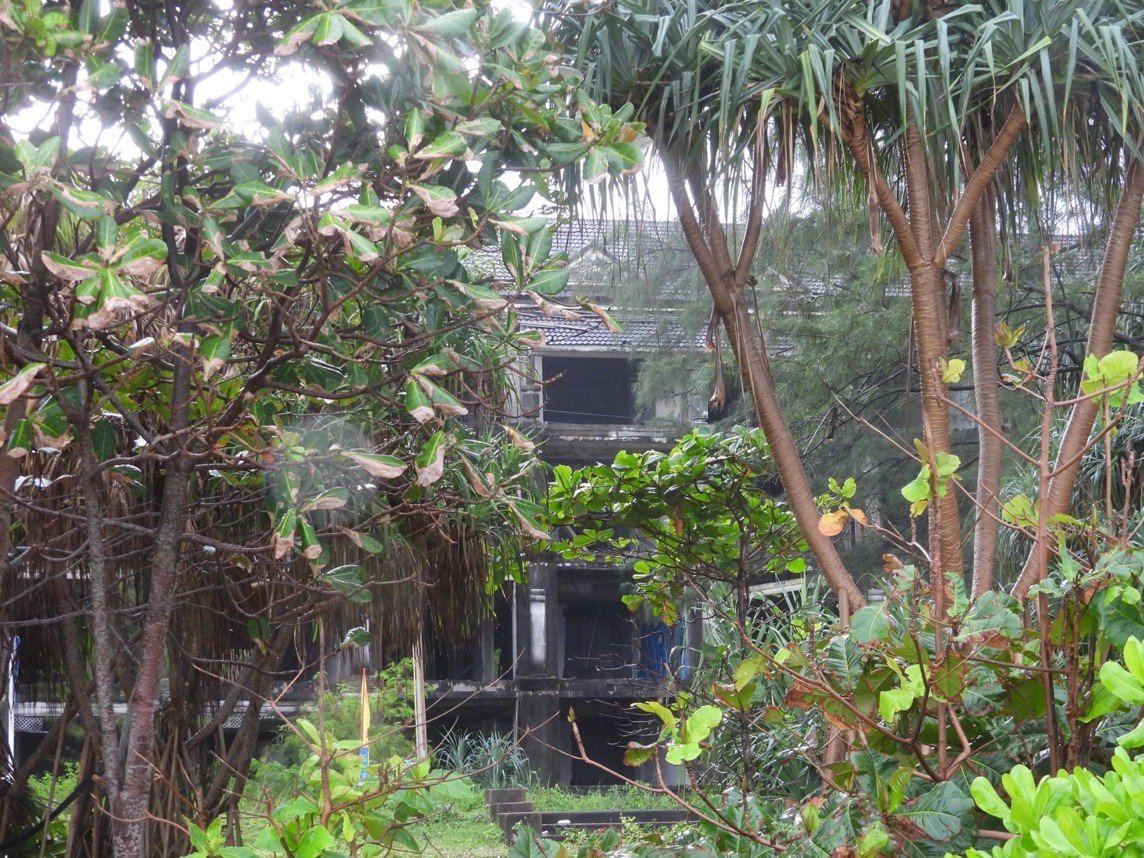
Hotel ruins along Mai Khao Beach Thailand (photo credit P. Maurice).
During the 2004 Boxing Day tsunami disaster, one young girl was able to save at least 100 lives by recognizing the impending cataclysm based on what she had learned in a recent geography class. Her story is a reminder of the power of STEMM education and a testament to strong girls everywhere.
By Patricia A. Maurice
23 December 2025, DOI: 10.5281/zenodo.17895213
The day after Christmas 2004 will long be remembered for one of the deadliest natural disasters in recorded history. At 7:58 AM local time, a massive magnitude 9.1 earthquake struck off the coast of Sumatra. A US Geological Survey (USGS) web page [1] details how scientists in Boulder Colorado and elsewhere quickly realized the unprecedented power of this earthquake: “The most haunting moment came when they realized the danger for the Indian Ocean region. Their scientific training told them an earthquake this large, in that location, would have displaced an enormous amount of water. Tsunami waves were likely already racing across the ocean at jet-plane speeds.” Moreover, “The team knew that every minute counted. They began reaching out to their international contacts and tsunami warning centers, though at the time there was no comprehensive warning center in the Indian Ocean that could disseminate warnings to the public.”
As earthquake-generated tsunami waves raced across the ocean, little could be done to warn the millions of residents and tourists along the coasts of nations like Indonesia, Thailand, India, Sri Lanka and even far away shores of Madagascar and Western Africa. According to the United Nations, “Waves were reported to exceed 20 m high, and travel up to 3 km inland.” Sadly, there were over 227,000 fatalities and “1.7 million people were displaced across 14 countries.”
The international STEMM community quickly mobilized both to help victims and devastated communities and to understand exactly what had happened in hopes of proactively mitigating future natural disasters. Indeed, in a March 2025 blog post [2], structural engineer Tracy Kijewski-Correa described how her young son was “on my back as we climbed through tsunami debris in Thailand.’
In the midst of such massive destruction, people around the world searched for some nugget of good news. The actions of one young girl supplied inspiration. Ten-year-old British schoolgirl Tilly Smith had been taking a morning walk with her parents and sister along Mai Khao beach in Thailand when she noticed the ocean was behaving strangely. Just a few weeks before, her geography teacher Mr. Carney had taught her class about earthquakes and tsunamis and had shown them a video of a tsunami. She later stated that: “as soon as I got on the beach, I recognized that the sea was not going in and out but was just coming in further and further on the beach. I also noticed there was a white froth on the surface of the sea and those two things that I linked back to the video and I just had a gut feeling that something was wrong [3].” She alerted her mother who didn’t at first believe her but eventually she and her dad found a security guard who knew there had been an earthquake off Indonesia. People on the beach were alerted to run and climb to higher floors in a hotel. As a result, there were no known deaths along that stretch of beach.
Years later she wrote that “the big lesson for me is how important it is to educate children about natural hazards and disaster risk.” Children can pass on what they learn at school to their parents and others in their communities. Moreover, she wrote that “Children are creative and will always come up with good ideas about how to reduce risk in their communities if they are engaged.”
As senior women leaders in STEMM, we know how important science education is, especially at an early age. But it can sometimes be hard to convince the public and many politicians of this critical need. The story of Tilly Smith and her heartfelt comments can be powerful and inspirational examples.
In October 2025, I took an early morning walk along the Mai Khao beach and photographed the ruins of beachfront hotels, wondering if one of these decaying structures had harbored Tilly Smith, her family, and others from the rampaging tsunami. It was a reminder of the vast power of the hydrologic cycle and of how thousands of lives can be swept away in an instant. Life is fragile and we all need to do what we can to protect it and to help make the world a better place. In these difficult times, being a senior woman leader in STEMM can sometimes be discouraging. But we are fortunate to have the education, skills, and platform to make a difference.
As the great naturalist Jane Goodall said, “what you do makes a difference, and you have to decide what kind of difference you want to make [4].”
References and links
[1] https://tsunamiday.undrr.org/news/20-years-indonesian-boxing-day-tsunami