
Read Our Blog
Complexities of power abuse in academia
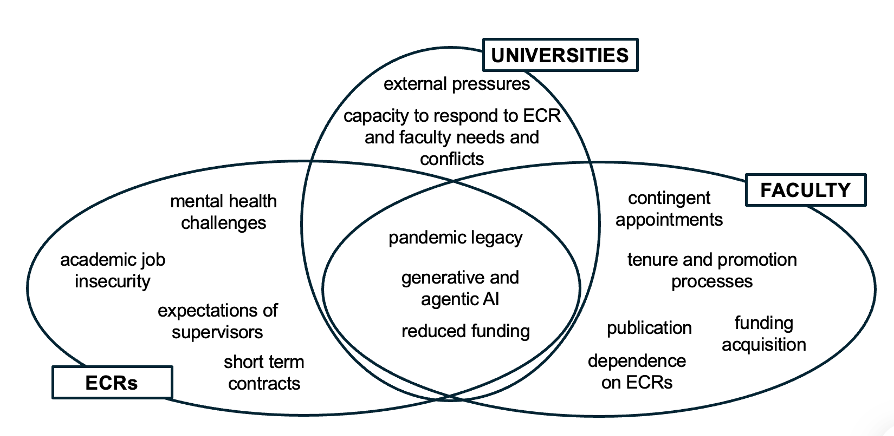
Senior women leaders need to be aware of the complexities of academic power abuse. Good leaders must recognize, investigate, and discourage abuses with fairness and with the understanding that power is not unidirectional.
How to not internalize systemic dysfunction as personal failure
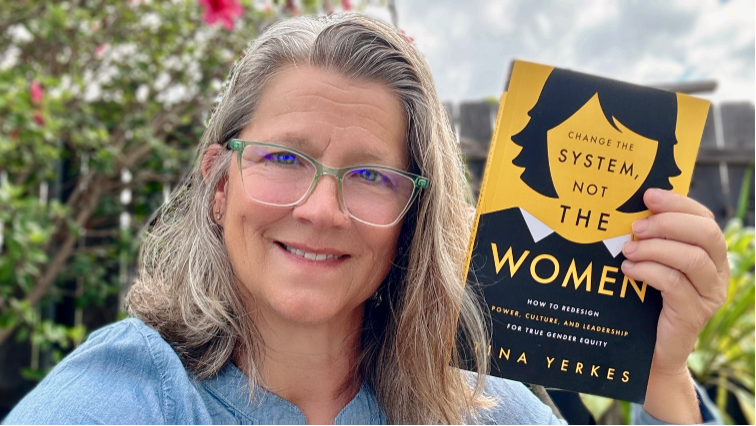
In “Change the System, Not the Women”, author Tina Yerkes holds leaders accountable for what their systems produce, not what they intend. She makes the case that equity is not a values exercise. It is a performance imperative.
Perspectives of an Asian-American male ally
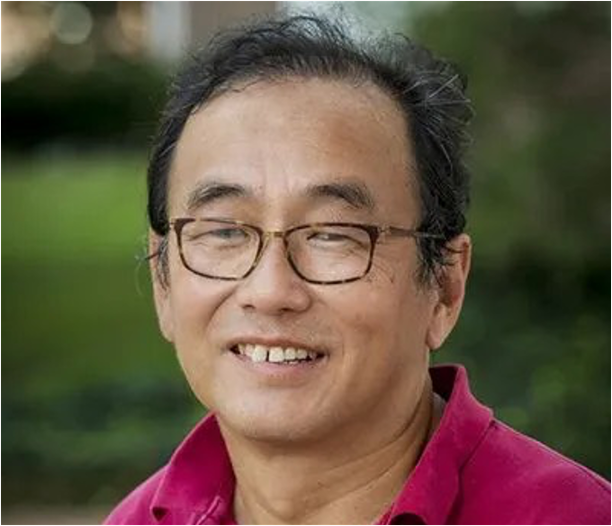
Professor Yu-Ping (Yo) Chin is a friend and colleague of the editors of this blog series, who has been an important ally for women in STEMM. He offers thoughts on his experience as an Asian-American academic and how it has shaped his perspective on supporting women, including senior women leaders.

Somebody has to ‘step up’ and do the hard leadership jobs in academia
Renowned chemist Catherine Murphy, Department Head at the University of Illinois, Urbana-Champaign, talks about the all-important job of being a Department Chair or Head.

To do our best work, we need to take care of ourselves physically and mentally
Dr. Kathy Anderson, a retired U.S. Air Force Captain with a PhD in computer science, draws upon her personal experiences as a woman in STEMM who has dealt with the challenges of physical and mental illness to stress the importance of taking care of oneself first and foremost.

Reflections from a Japanese onsen
For senior women leaders, it is important to take time to observe, to think, and sometimes to relax, unplug and meditate.

The Daruma and need of women in STEMM for resilience
The Daruma symbolizes the Japanese ‘fall down seven times, stand up eight’ philosophy of resilience. Women in STEMM need to be resilient, both individually and collectively.

“How to Rule the World” provides lessons for leaders in STEMM
Theo Baker’s 2026 book “How to Rule the World: An education in power at Stanford University” warns about dubious scientific research and flawed ethics and provides insight into an undergraduate’s experiences at a leading research university.

On not perpetuating academic survivorship bias
As senior women in STEMM academics, we are proud to be role models for our junior colleagues. But we should take care to avoid the potential pitfalls of the survivorship bias that pervades academia.

Women supporting women around the world
As senior women leaders in STEMM we know we are stronger together — we all benefit when we support one another. But this is also true when we support women outside of STEMM, including women whose paths we cross in our everyday lives or when traveling.

A ‘beginner’s guide’ for dual-career academic STEMM couples: Job search and negotiations
The first step for most dual-career academic STEMM couples is to find and negotiate two faculty positions. Here, we focus on this step at institutions in the US and Europe.

When do we learn about leadership?
Prof. Jen Heemstra’s 2025 book “Labwork to Leadership” is one we wish that we had been able to read when starting out as assistant professors. Even senior women leaders in STEMM will be able to learn something from this book.

A woman’s eye view of the very bad boys of tech
Tech Journalist Kara Swisher’s 2024 Burn Book: A Tech Love Story is an irreverent, humorous, and at times downright frightening memoir that helps drive home the many reasons why we need more women at the highest echelons of STEMM.

Who benefits from the lack of advancement of women in STEMM academics?
Cicero famously asked “who benefits?” to expose interests motivating crimes. We can pose the same question regarding the motivations that underlie the lack of women’s advancement in STEMM academics.

Development of generative AI policy at Lund University
Eva Åkesson, Professor of Chemical Physics at Lund University (Sweden) and former Rector of Uppsala University, kindly shares some of her observations from working on university policy for generative AI (GenAI) at Lund University. Her candid insights are beneficial for senior women leaders grappling with this challenging issue.

What every senior woman academic leader should know about artificial intelligence
In this post on artificial intelligence (AI), we focus on the ‘Top 10’ things every senior woman leader in academia should know about AI, especially generative AI (GenAI). We hope that this will help to ensure its wise and ethic use.

Service activities in academia need to be properly valued and supported
In US and UK universities, the job responsibilities of most professors are often grouped into three categories — teaching, research, and service. In European universities, service is often less explicitly recognized despite its crucial importance for institutions. Regrettably, service can become a ‘trap’ for women at all levels. We provide suggestions on how to value and manage service activities, so they serve the university and society without hijacking an academic career.

Better Science Initiative: Sustainable research culture for all
The Better Science Initiative aims to rethink the notion of academic excellence and promotes best practices for a healthy research culture in which all researchers can thrive.

A tsunami, a girl, and the power of STEMM education
During the 2004 Boxing Day tsunami disaster, one young girl was able to save at least 100 lives by recognizing the impending cataclysm based on what she had learned in a recent geography class. Her story is a reminder of the power of STEMM education and a testament to strong girls everywhere.

Career Advice in U.S. Academia’s Moment of Crisis
Dr. Karen Kelsky, author of “The Professor Is In”, reflects on the second edition of her career advice book for PhDs and the state of academic career advising more generally. Her comments are especially timely in the context of the current turmoil confronting American higher education.