
Reflections from a Japanese onsen
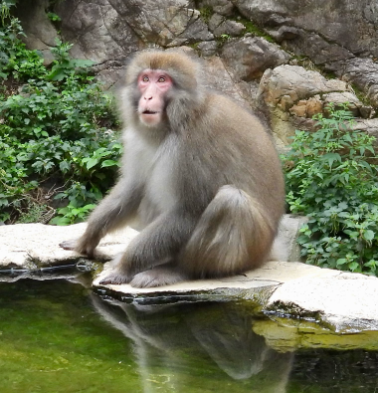
Photo credit: P.A. Maurice
For senior women leaders, it is important to take time to observe, to think, and sometimes to relax, unplug and meditate.
By Patricia A. Maurice with Janet G. Hering
7 July 2026, DOI: 10.5281/zenodo.21022244
Senior women leaders in STEMM lead hectic, busy lives. Of course, our lives are often incredibly interesting and richly rewarding. Most of us would not want to do anything else. As many of our interviewees [1-13] and guest bloggers [14-17] have made clear, it is a privilege to be a senior woman leader in STEMM.
Nevertheless, the years of hard work, stress, and – for many of us – isolation can take a toll on our physical and mental health and even sometimes on our creativity. This problem is something I found myself reflecting upon during a recent trip to Japan, while enjoying the calming and muscle-relaxing benefits of Japanese onsen baths.
For those of our readers who have not lived or traveled in Japan, an onsen is a natural hot spring. As a nation built upon an island arc, where ocean crust is subducting beneath the Eurasian (forming more southern islands) or North American (forming more northern islands) plates, Japan is a showcase of tectonic processes. As part of the Pacific ring of fire, Japan contains numerous volcanoes, including a number that are considered very active. The onsen are another manifestation of tectonic activity as groundwater heated by magma or other geothermal processes at depth rises to the surface.
The Japanese people have long understood the numerous physical, mental, and even public health benefits of immersing oneself in an onsen bath. Today, there are many hotels and traditional guesthouse known as ryokan that offer onsen experiences to guests. There are also many public onsen establishments and even free onsen foot baths by the side of the road in many towns. Even the macaques of Japan have gotten in on the action as I recently witnessed at the Jidokudani Yaen-Koen snow monkey park (see photo above).
Today, a typical onsen bathhouse is separated by gender as everyone bathes in the nude. This was different in the past; my father told stories of visiting a Japanese onsen while on R&R from the Korean War circa 1951 and seeing entire families, indeed whole communities, bathing together. My cousin tells a story of his father visiting an onsen while in Japan training to serve as a machine gun operator in Korea. He began lathering up and was yelled at by a local elderly woman ‘hey, no soap, GI.’ As we recently discussed in a post about field work [18], it is important to understand local customs when travelling. Indeed, the entire onsen experience is highly traditional and ritualized, which is one of its most appealing qualities. After all, travel should teach us to appreciate other cultures and get us out of our comfort zones.
While the topic of a Japanese onsen might not immediately conjure ties to senior women leaders in STEMM, I found my time spent in onsens to offer many reflections that might be useful to women colleagues.
There is good and bad in everything
Since onsen ultimately result from the same tectonic phenomena that cause Japan to suffer from natural geohazards like earthquakes, volcanic eruptions, and tsunamis, onsen are a good reminder that there is both good and bad to be found in everything. Indeed, the very islands of Japan would not exist without the powerful tectonic forces that frequently shake and rattle them. Every challenge is also an opportunity for those open to exploration and discovery. As we wrote in October 2024, ‘within every problem lies an opportunity’ [19]. A good leader only focuses on a problem to the extent required to understand and address it. As we wrote in April 2024 [20], ‘A good leader focuses not on rehashing problems but on finding solutions.’ Finding a way to nurture the good within a difficult colleague can help make everyone’s lives and an entire institution much better.
It can be restorative to be surrounded, at least for a time, by other women
Even though some STEMM disciplines such as the biological and life sciences have increasing numbers of women, others such as computer science, mathematics, physics, and many engineering fields remain male dominated. Even in fields with increased female representation, women are generally still few and far between at the highest ranks. Moreover, university upper administrations and industry boards and leadership positions are steadfastly male bastions. I find the women-only onsen spas (the men have their own spaces) to feel a bit like a refuge after a career surrounded by men in the geological sciences and within a college of engineering. Don’t get me wrong – some of my worst professional experiences involved dealing with female ‘queen bees.’ But one lesson from my onsen experiences is that it’s useful to seek out opportunities, at least every now and then, where you are surrounded by other women. If nothing else, it can be refreshing.
We women are alike in key ways and we need to support one another
In the onsen, there may be little girls, elderly (great) grandmothers, college students, and middle-aged women all stripped down to share in bathing, relaxing, unwinding from or preparing for the day. There is no better reminder that no matter our age or background or history, we are all women and we need to watch out for and support one another. As discussed in our June 2024 post [21], senior women leaders need to nominate other women in STEMM for awards. Melinda French Gates gave many examples of women working together to effect positive change in her book The Moment of Lift, which we reviewed in August 2024 [22].
We are part of the natural world, and we need to value and preserve it
Water is our greatest treasure because all life as we know it cannot exist without water. Sitting in the warm/hot, variously salty water of an onsen bath reminds us of the critical importance of water. After a time of experiencing water’s buoyancy, we are reminded that our own bodies are mostly water. We women in STEMM need to use our science and engineering abilities and knowledge as well as our voices to do good in the world. Even if we do not work in an environmental field, we can exert efforts for sustainability throughout our personal lives and our careers.
Busy people benefit from taking time to unplug
For busy women leaders, taking a break can feel extravagant, unproductive, and even downright selfish. Once, I suggested to a colleague at a conference that she take an hour’s break to visit an interesting exhibit at a nearby museum specifically designed to complement and educate the public about the conference topic. She was appalled that I would consider “wasting time outside the venue”. While it’s a point well taken not to vacation at what might be public or institutional expense, I personally feel it’s important to step outside enough to understand the perspectives of the broader public and to nurture one’s own creativity. Some of my best scientific collaborations developed from taking a stroll through a garden or a museum with another conference attendee – talking at least part of the time about our science. In the onsen, no cell phones are allowed. No scrolling, no social media, no watching videos. And usually, no talking to other women in the onsen. You are forced either just to think or clear your mind completely. Many times in my life, I have figuratively battered my head against the wall of some scientific or personnel problem and suddenly found the solution immediately after taking a break. Even if you don’t have a local onsen, setting aside time to unplug is invaluable. Wasting too much time on email and social media can be highly counter-productive. Too many times, I’ve watched junior or mid-career colleagues “lean in” for so long that they blow a fuse, burn out, and/or get sick. Find some personal time and fiercely guard your ability to temporarily unplug.
Traditions matter but it’s OK to break the rules occasionally
As mentioned above, silence can be an important part of the onsen experience, helping to foster tranquility. That said, I have sometimes witnessed women enjoying quiet conversations – and that makes me smile. Once, years ago, I outrageously broke onsen decorum with an elderly Japanese woman when we were the only two visitors in an onsen spa. While soaking, I noticed she was very quietly humming a song from The Sound of Music. So, I started humming the same song. Soon, we were singing the song together. That led to us going through the entire musical loudly and joyously together. She did not speak English and I did not speak Japanese but we both knew those songs. Afterwards, we dried ourselves and she silently taught me how to wrap and tie myself in a traditional Yakuta bathrobe (like an informal kimono) supplied by the ryokan for guests to wear. The next day, I ran into her family while visiting the local temple complex and was treated like a long-lost family member – helped by her grandchildren’s abilities to translate.
The moral of this story is that while respect for traditions matters, sometimes it’s better to break with tradition under the right circumstances. Being a senior women leader in STEMM can present an opportunity to rethink which traditions work for all and which are holding people and the institution back. Sometimes we can accomplish a lot by being bold and innovative. I am certain the elderly Japanese woman had as great a time as I did – and what a memory!
In closing, here are some questions for further thought:
· Have you ever visited an onsen? If so, what was the experience like?
· Do you find time to unplug? If not, try establishing some time every week and maybe eventually expanding to every day.
· Do you actively push yourself outside of your comfort zone, and if so, what have been the results?
In the spirit of this post, we are taking a summer break. Look for our next post on August 25.
Notes, links, and references
[1] https://www.epistimi.org/blog/equity-for-women-in-stemm-academics-as-a-strategic-priority
[6] https://www.epistimi.org/blog/a-university-president-must-act-responsibly-and-consequentially
[8] https://www.epistimi.org/blog/the-leadership-experience-in-environmental-consulting
[11] https://www.epistimi.org/blog/allies-for-women-leaders-in-stemm-thoughts-from-an-unabashed-optimist
[14] https://www.epistimi.org/blog/development-of-generative-ai-policy-at-lund-university
[15] https://www.epistimi.org/blog/better-science-initiative-sustainable-research-culture-for-all
[18] https://www.epistimi.org/blog/leading-through-the-joys-and-hazards-of-scientific-field-work
[19] https://www.epistimi.org/blog/preparing-to-lead-effectively-through-emerging-challenges
[20] https://www.epistimi.org/blog/the-best-advice-we-ever-got
[21] https://www.epistimi.org/blog/nominating-women-in-stemm-for-awards
[22] https://www.epistimi.org/blog/the-moment-of-lift-by-melinda-gates