
To do our best work, we need to take care of ourselves physically and mentally
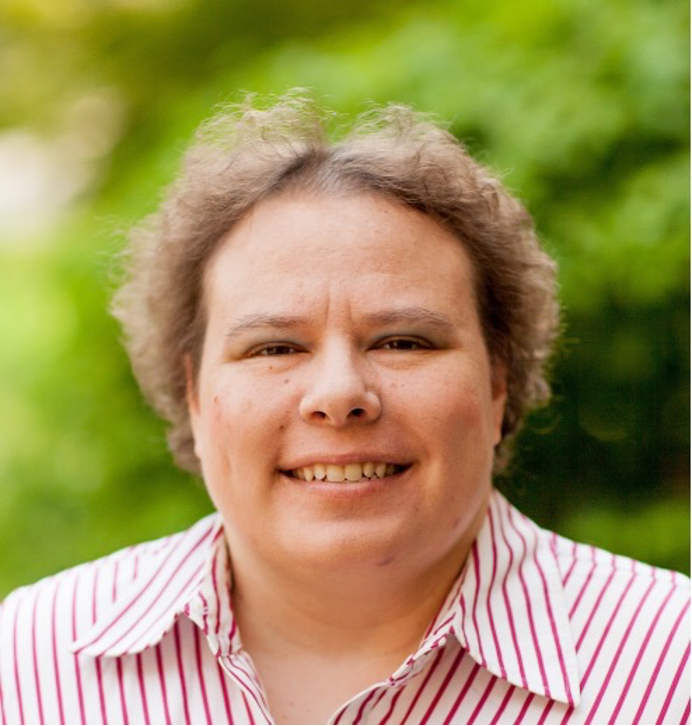
Kathy Anderson, PhD (Photo credit: University of Notre Dame)
Dr. Kathy Anderson, a retired U.S. Air Force Captain with a PhD in computer science, draws upon her personal experiences as a woman in STEMM who has dealt with the challenges of physical and mental illness to stress the importance of taking care of oneself first and foremost.
By Kathy Anderson with Patricia A. Maurice and Janet G. Hering
25 August 2026, DOI: 10.5281/zenodo.21759208
As one of few female full professors in the College of Engineering at the University of Notre Dame (UND), I (Patricia) always tried to keep tabs on woman students and junior faculty, often serving as a mentor and sometimes as a consultant to senior male colleagues and supervisors. Although I never mentored Kathy Anderson [1], I was aware of her extraordinary PhD research developing emergency management software and understood that she spent time on leave from UND for personal health reasons. Recently, we had the opportunity to talk at length about some of the challenges she faced in the military and in academia, and how she has dealt with physical and mental stress, including mental illness. In truth, many ambitious, hard-working, high performing women and men in STEMM struggle with exhaustion and stress and many also face physical and/or mental illness. Dr. Anderson kindly agreed to this interview about her path in STEMM, to encourage women to prioritize their own wellbeing.
Patricia Maurice (PM): You are living an extremely interesting life; can you briefly summarize your early life and career?
Kathy Anderson (KA): My early life was one of service to the country. I grew up the daughter of an officer in the Air Force, and I knew that I wanted to serve my country from an early age. I was commissioned in the Air Force in 2000 and became a Minuteman III missileer in my first tour of duty. From an early age, I also loved Math and Computers. I was accepted into the civilian institution program as a PhD student in computer science at UND, where I became a teaching fellow funded by the US government though the GAANN program [2].
PM: How did you first come to realize you were battling a mental illness, and how has it affected your career?
KA: I did not realize that I was battling a mental illness until deep into the illness. In the Air Force, I began having depression. However, I was scared to ask for help, as I thought it would end my career. I also thought that I could deal with the depression myself. Additionally, being a missileer was highly stressful, and we often had shifts of duty that disturbed our normal sleep routines. After about 18 months of disturbed sleeping patterns, high stress, and depression, I went directly into the PhD program at UND. The stress continued, and within 9 months, I was in a psychiatric hospital with a psychotic break and severe depression. It was the community, including my parents, who had recognized the illness in me and recommended that I seek medical treatment.
PM: In talking with you, I have noted parallels with many other women in STEMM. At times, you were marginalized in a male-dominated environment. You were always determined to achieve at the highest level. What advice do you have for other women to help them either avoid or deal with the ramifications of long-term stress and exhaustion?
KA: Long-term stress and exhaustion are not good for one’s health. They can lead to illness and burnout. Once these happen, often it takes much longer to recover than if one had been able to have a balanced life with the ability to rest and recover daily and weekly. You only have one body; it is important to take care of yourself. Your health should be your number one priority. If possible, evaluate whether you need additional skills like the ability to say no (especially when you already have a full plate), the ability to delegate projects, and the ability ask for help or talk to your boss when you are overwhelmed. Taking a preventative posture toward these skills will go a long way in the long run.
PM: What would you most like senior women leaders in STEMM to know about dealing with physical and/or mental illness, either their own or amongst students or colleagues at their institutions?
KA: By not taking care of my mental health, my situation became worse in the long run. The issues compounded on each other. My depression affected my weight and sleep, which also affected my physical health. I gained a lot of weight. My physical and mental health also affected my work. It was difficult to stand for longer than 10 minutes or to walk through campus, I was sleeping for days at a time, and my work itself was not up to par. At one point, my blood sugar (measured by an A1C test) was almost high enough for a diagnosis of diabetes. Once I had an open discussion with my advisor about what I was going through, it took a lot of pressure off me and allowed me to get the help that I needed to recover.
PM: Are there any other ‘words of wisdom’ you would like to pass on from your own experiences that might help other women in STEMM?
KA: First, believe in yourself. You can do it. Second, talk to your boss or, if needed, a mental health professional if you are getting overwhelmed or depressed, especially if it is affecting your self-care. Asking for help is not a weakness, rather, it is a sign of true health and strength. The workplace these days, in general, is more open to mental health awareness and self-care.
PM: What are you up to now, and what are you most looking forward to in the future?
KA: Currently, I am the Forever Connected Program Coordinator at the Forever Learning Institute in South Bend (IN, USA). There, I run the Forever Connected program, which is a program to help senior citizens connect to each other and to community resources through digital literacy. I teach classes, run a tech help desk, and manage a computer lending library, all tailored to helping senior citizens for whom a lack of computer literacy can result in profound isolation.
My favorite hobby is putting together jigsaw puzzles. I’m looking forward to finishing the world’s largest jigsaw puzzle designed by Keith Haring [3]. I began it in 2011, and I have been working on it for 10 years. I am exactly halfway through it. I estimate that it will take another 10 years to finish.
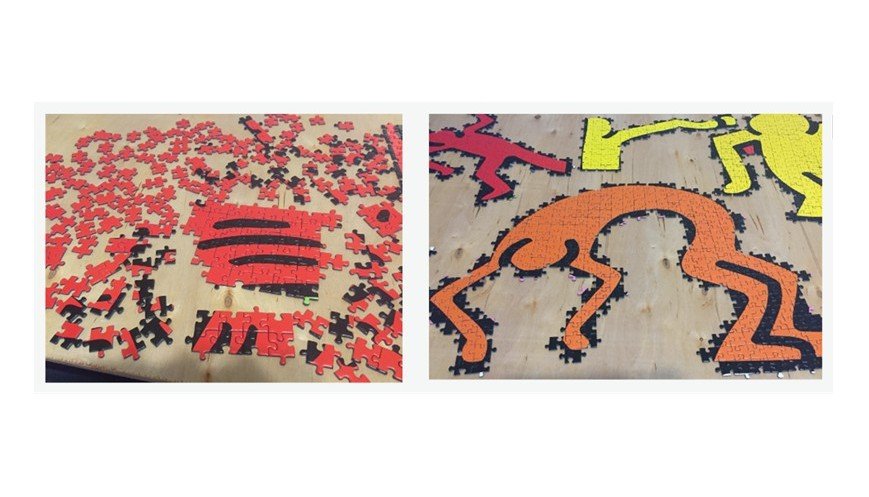
Photos of the puzzle as a work in progress [3]
PM: Thank you for your frank and enlightening comments. If anyone would like to read more about Dr. Anderson’s life story, see [4,5,6].
In closing, here are a few questions to stimulate further thought and discussion:
· Are you taking care of your full mind and body (mentally, physically, spiritually, intellectually, and emotionally)? If not, what is preventing you from doing so, and what can you change to ensure that you have good health and self-care?
· How do you perceive asking for help? Do you need to change your perception?
· For one week, log each hour you spend on various tasks. Analyze the results. Are you getting enough recovery and self-care time each week? How can you build more time into your schedule, if needed?
Notes, links, and references
[1] https://www.authorkathyanderson.com/ (Note: Kathy Anderson is a pen name.)
[2] Graduate Assistantships in Areas of National Need (GANN) https://www.ed.gov/grants-and-programs/grants-special-populations/grants-economically-disadvantaged-students/graduate-assistance-areas-of-national-need-84200
[3] This was the world’s largest jigsaw puzzle when I first began it in 2011. Since that time, they have come up with a larger world’s largest jigsaw puzzle, which I had to purchase as well. However, I began the one from 2011, and I really want to finish it. See: https://www.prnewswire.com/news-releases/ravensburger-presents-worlds-largest-puzzle-and-celebrates-25th-anniversary-of-labyrinth-115714834.html}
[4] Anderson, K. 2021. Lilies in the Field. FriesenPress. Paperback (ISBN: 978-1-5255-7237-1) Paperback (ISBN 978-1-5255-4373-9); Hardcover (ISBN: 978-1-5255-4372-2); eBook (ISBN: 978-1-5255-4374-6); Audiobook (ISBN 978-1-03-917568-6)
[5] Anderson, K. 2023. Beyond Reality and Back Again: Lessons from a Lifetime. FriesenPress. Paperback (ISBN: 978-1-5255-7237-1); Hardcover (ISBN: 978-1-5255-7236-4); eBook (ISBN: 978-1-5255-7238-8); Audiobook (ISBN: 978-1-03-917420-7).
[ 6] Anderson, K. 2025. Beyond Reality and Back Again Workbook: Lessons in Resilience from a Soldier, a Scientist, and a Survivor. FriesenPress. Paperback (ISBN: 978-1-03-833392-6); Hardcover (ISBN: 978-1-03-833393-3).